
Supplier Onboarding: The First Line of Defense Against Invoice Fraud

An invoice arrives from a known supplier, but with new bank details for an urgent payment. Your accounts payable team, under pressure to maintain good supplier relationships, processes it quickly. A week later, the real supplier calls, asking where the money is. The payment, unfortunately, went to a fraudster who had successfully impersonated them. This scenario, known as payment diversion fraud, is increasingly common and highlights a critical vulnerability that exists long before an invoice is ever paid: a weak supplier management process.
Many businesses see formal supplier onboarding as administrative overhead. In reality, it is one of the most effective security controls a finance or procurement team can implement. A structured onboarding and verification workflow is your first and best line of defense, creating a trusted foundation for your entire procure-to-pay cycle.
The Real Root of the Problem: Unverified Supplier Data
Invoice fraud doesn't typically begin with a brilliantly forged document. It more often starts with compromised supplier information or the introduction of a fraudulent entity into your systems. Without a formal process, supplier data is often added on the fly, based on an email request or information provided in an initial invoice. This reactive approach creates significant risks:
Lack of Verification: Contact details, and most critically, bank account information, are taken at face value without independent confirmation.
Decentralized Information: Supplier data lives in different emails, spreadsheets, and team members' heads, with no single source of truth.
Uncontrolled Changes: A simple email request is often enough to change a supplier's bank details, opening a direct door for fraudsters.
When your supplier list isn't secure, your payment process can't be either. The core issue is not just about spotting a fake invoice; it's about ensuring you are only dealing with legitimate, verified partners from the very beginning.
A Structured Onboarding and Approval Workflow
Implementing a formal purchase order and supplier approval process is the most effective way to mitigate these risks. It shifts supplier management from a reactive, administrative task to a proactive security function. A robust process consists of several key stages, creating a clear audit trail and multiple control points before any financial transaction can occur.
Here’s how a structured workflow in a system like Digital Purchase Order (DPO) creates a reliable supplier foundation:
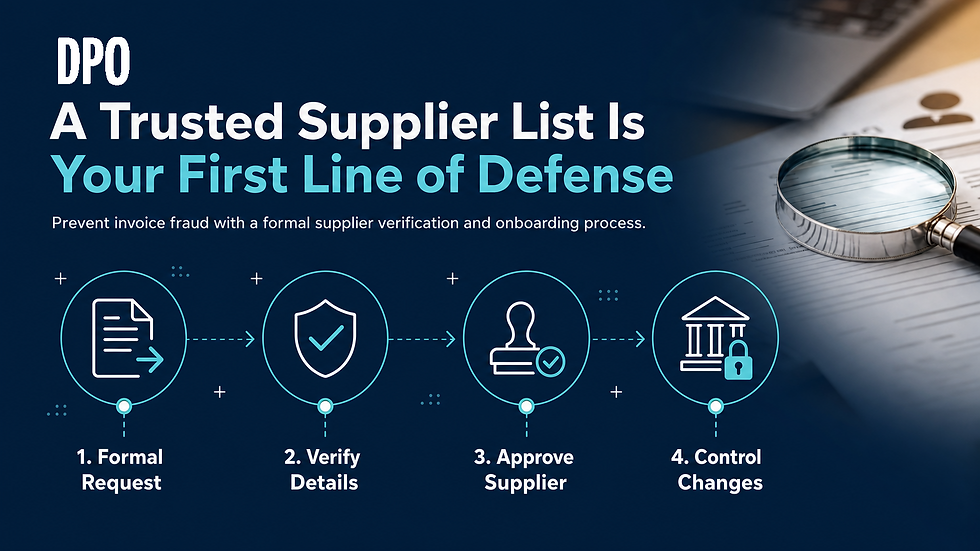
Centralized and Formal Requests: All requests to add a new supplier must be submitted through a standardized digital form. This eliminates informal email or verbal requests and ensures all necessary information—company name, contact details, tax ID, and bank information—is captured consistently.
Independent Verification: Before a supplier is approved, their details must be independently verified. This is a crucial step. It means not just replying to the email that requested the setup, but using a trusted, separate channel. For example, calling a known contact at the supplier’s company (using a phone number from their official website, not the one in the email) to confirm bank details.
Formal Approval Chain: The new supplier record is routed through a predefined approval workflow. A manager in procurement or finance must formally sign off on the new supplier, confirming that verification has taken place. This creates a clear, documented record of who approved the supplier and when.
Creation of a Trusted Supplier Master List: Once approved, the supplier is added to a central, controlled master list within the system. All future purchase orders can now only be raised for suppliers from this approved list.
Controlled Change Management: Crucially, any subsequent request to change a supplier's bank details must trigger a new, rigorous re-verification and approval process. An alert system can flag these high-risk changes, ensuring they receive the necessary scrutiny.
From a Simple Directory to a Security Shield
By implementing this process, your supplier list is transformed from a simple, vulnerable directory into a powerful shield against payment fraud. It establishes a clear principle: no PO is raised and no invoice is paid to any entity that has not passed a formal verification and approval process. This control exists independently of the invoice itself.
When an invoice finally arrives, your team doesn't have to guess if the supplier is real or if the bank details are correct. They can match the invoice against an approved purchase order, which is linked to a supplier record that has already been vetted. This systematic approach ensures that even if a fraudulent invoice is convincing, it will fail at the first hurdle because it doesn't correspond to a verified entity in your system.
Security starts not with the final payment, but with the very first step of supplier engagement. A secure onboarding process is not bureaucracy; it is the cornerstone of effective financial control.
Read Our Guide on Secure Supplier Onboarding
Discover the essential steps to building a robust supplier verification and management process. Our guide provides a practical checklist to help you identify weaknesses in your current workflow and build a stronger defense against fraud.
Read the guide here:


