
Committed Cost in Construction: What Your Project Budget Is Missing

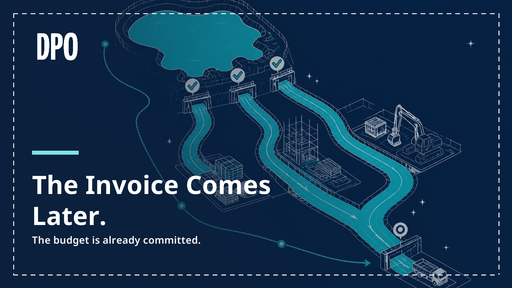
Construction projects rarely wait for invoices before moving forward.
Materials are ordered. Equipment rentals are extended. A specialist contractor receives an additional instruction. An urgent replacement is approved on site. A variation is agreed so the programme can continue.
The invoice may not arrive for days or weeks.
The cost, however, is already real.
Accounting spend and project spend are not the same thing
Traditional financial reports are built around posted invoices and actual transactions. That is essential for accounting, but it can leave a blind spot for project teams.
A project manager needs to know not only what has already been invoiced, but also what has already been approved and ordered.
This is committed cost: money the project has effectively promised to spend even though the invoice has not yet been processed.
If committed costs are tracked in separate spreadsheets, email approvals or individual site records, the reported remaining budget can look healthier than it really is.
Where the gap appears
Consider a project with several parallel workstreams:
the site team orders additional materials,
procurement extends a rental agreement,
a subcontractor receives an approved extra scope,
the project manager authorizes an external service.
If those commitments are not reflected in the budget view until invoices arrive,
another purchase may be approved against money that is already spoken for.
Bring the commitment into the budget earlier
A structured Purchase Order process moves that visibility forward.
With DPO, an approved purchase can be recorded against the relevant project budget as part of the procurement workflow. Project Management, Commercial, Procurement and Finance can therefore see approved purchases and open POs before the invoice reaches accounting.
The workflow becomes:
Project budget → Purchase request → Approval → Purchase Order → Invoice
That creates a clearer distinction between what is planned, what is committed and what has already been invoiced.
Faster site decisions without losing the audit trail
Construction teams also need speed. A process that is too slow will be bypassed.
That is why the approval step needs to be simple enough for operational teams while still recording who approved the order and creating a visible purchase trail for the commercial and finance teams.
The objective is not more administration. It is fewer financial surprises.
Know the cost while you can still manage it
By the time an unexpected invoice appears, the commercial decision has often already been made.
The better moment for cost control is when the project commits to the purchase.
Want to see DPO in action?
Book a personal demo and see how DPO can connect project budgets, purchase approvals and open POs in one workflow.
Questions?


